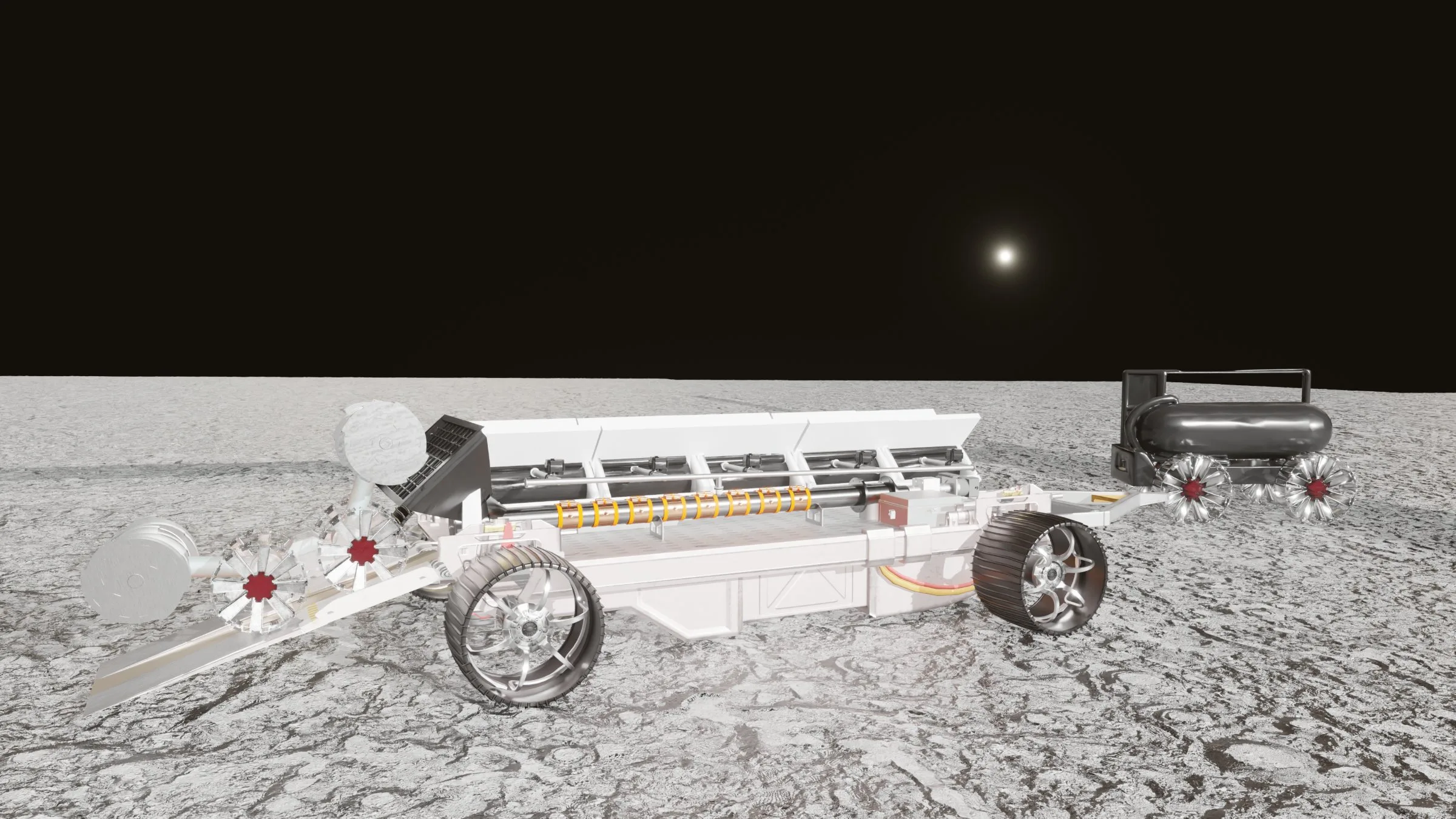
VADER
Volatile Auger Dryer Extraction from Regolith: a continuous, auger-based system that pulls water vapor straight from icy lunar soil for in-situ resource utilization.
Water made on the Moon, not shipped to it.
Water ice hides in the Moon's permanently shadowed craters, and turning it into oxygen and propellant is the key to staying. VADER replaces slow, batch-style volatile extraction with a single auger that conveys regolith, heats it into a controlled sublimation regime, confines the vapor for downstream capture, and discharges spent tailings, all continuously.
- Generates water vapor from icy regolith for downstream ISRU capture
- Controlled thermal processing keeps it in the sublimation regime
- Variable auger geometry tunes residence time, throughput, and heat transfer
| System | VADER: Volatile Auger Dryer Extraction from Regolith |
|---|---|
| Function | Continuous water-vapor extraction |
| Architecture | Single auger · convey + heat + confine + discharge |
| Environment | Lunar permanently shadowed regions |
| Readiness | TRL 4 · Phase I complete |
| Funding | NASA SBIR Phase I → Phase II |
| Phase II goal | CLPS-relevant thermal vacuum demonstration |
| Modeling | DEM & thermal models |
| Scale | CLPS-compatible · scalable to larger ISRU |
Technology Readiness Level is NASA's 1–9 scale for how mature a technology is, from basic principles (TRL 1) to flight-proven (TRL 9). NASA TRL scale ↗
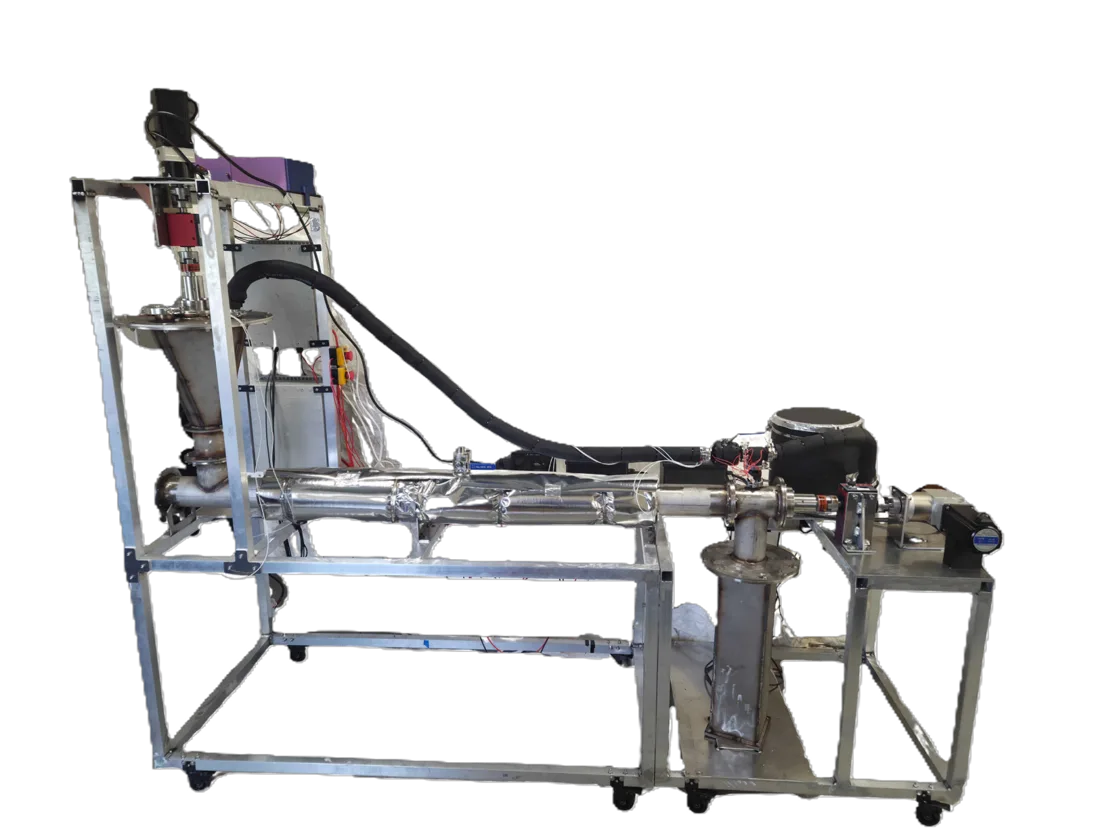
One auger, four jobs, no cycling.
Convey
The auger continuously transports icy regolith from intake through the heated section: no batch load, seal, or unload cycle.
Heat
Controlled heating drives water ice into a sublimation regime, releasing vapor while limiting liquid-phase formation.
Confine
Regolith plugs and sealing confine the water vapor and direct it to a downstream cold-trap capture system.
Discharge
Spent, dried tailings exit the far end, ready for the next continuous charge of icy feedstock.
Turn it over yourself.
The VADER auger dryer and its iPEX excavation rover, in your browser. Drag to orbit, scroll to zoom.
Auger dryer & iPEX rover
Icy regolith is metered in low on the auger and conveyed up through a heated section, where controlled heating drives water ice to vapor. Regolith plugs confine the vapor and route it to a cold trap. Conveying, heating, confinement, and discharge all happen in a single auger.
Targeted maturation, not a clean sheet.
NASA selected VADER for a Phase II SBIR under Z-LIVE.03: “Continuous Auger-Based Water Vapor Extraction from Icy Lunar Regolith.” Phase II starts from functional TRL 4 hardware and an existing modeling framework. It takes the Phase I testbench to a higher-fidelity extraction subsystem that runs in the sublimation regime, turning ice directly to vapor under low pressure, and delivers that vapor to downstream water capture.
Hardware tests are paired throughout with DEM and thermal model correlation. The work supports NASA civil space shortfalls 1578, Extraction and Separation of Water from Extraterrestrial Surface Material, and 581, ISRU System Modeling.
"Build a little, test a little, learn a lot."
- Demo 1Upgraded Phase I testbench. A vacuum-sealed bench with improved sealing, pressure regulation and thermal control, characterized with frozen, granular icy simulant.
- Demo 2Heat transfer & auger geometry. Internally heated auger concepts and new flight geometries that mix the bed and break up the insulating layer of regolith at the heated wall.
- Demo 3Vapor interface & staged extraction. A vapor outlet and filtration path that cuts particulate carryover, and sublimation zones separated by an intermediate plug for staged volatile release.
- Demo 4CLPS-relevant TVAC test. An integrated subscale demonstration in thermal vacuum.
Hardware in the loop.
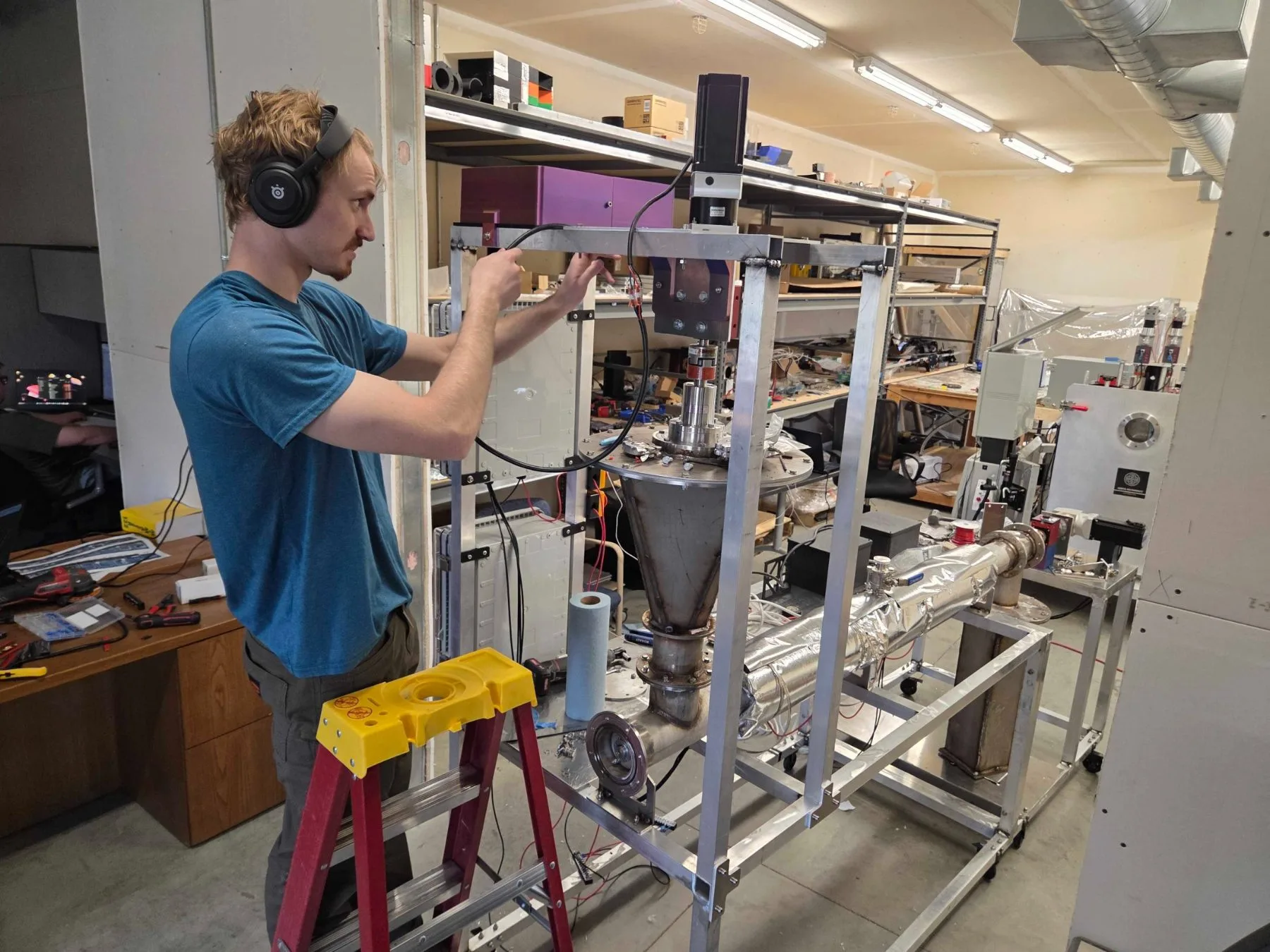 Auger-dryer assembly
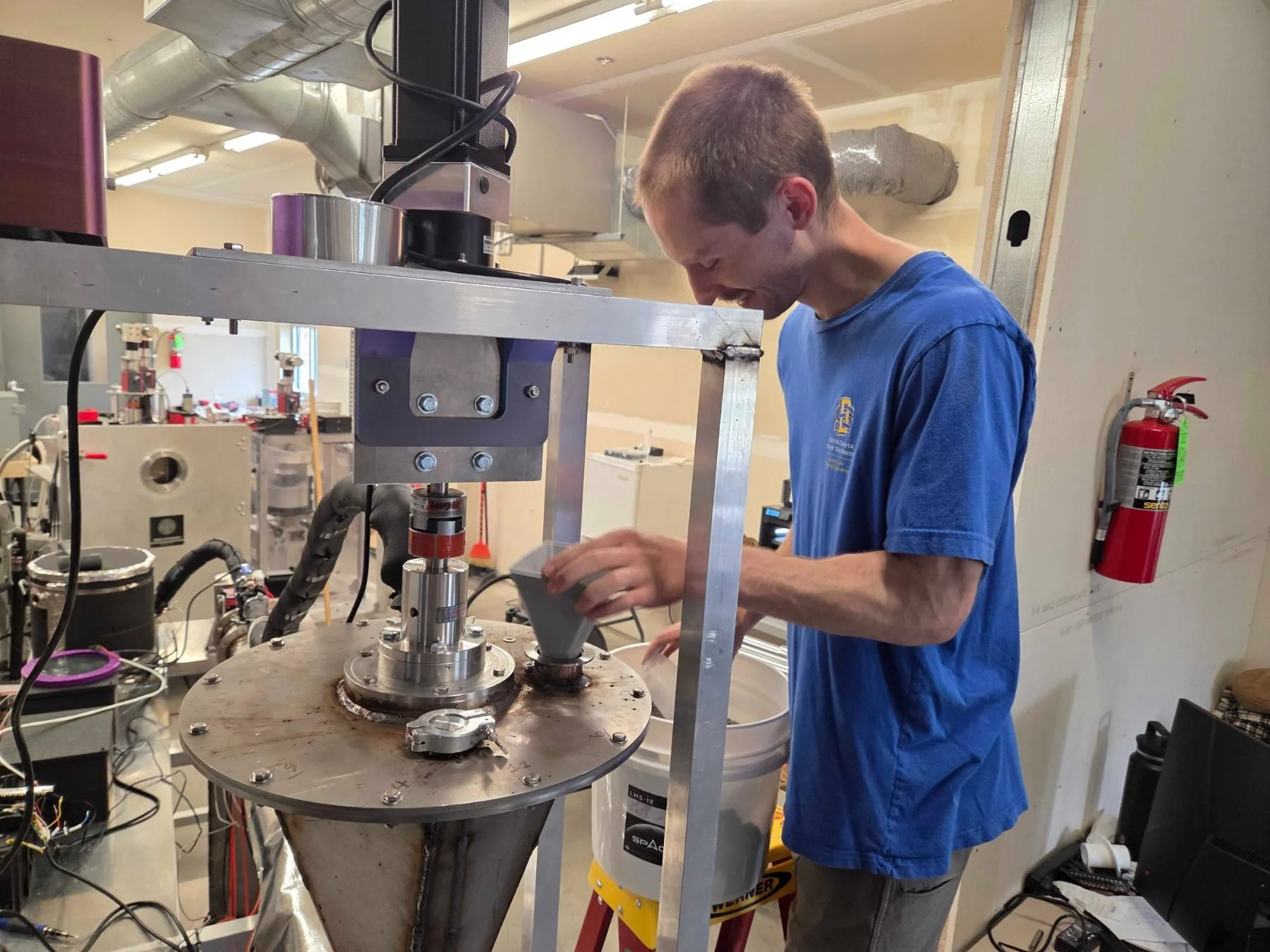 Simulant feed · auger intake
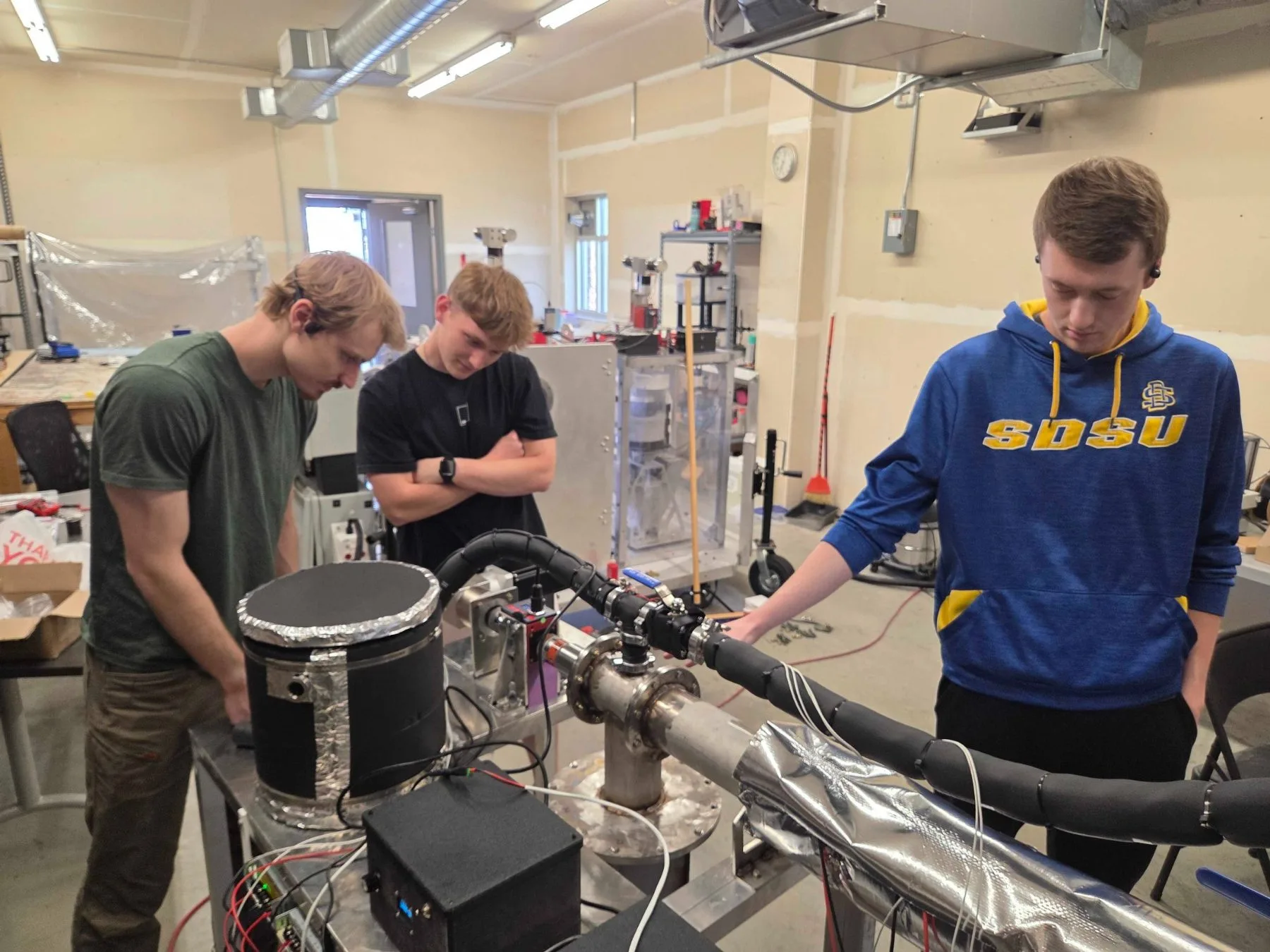 Sublimation testbench · lab test