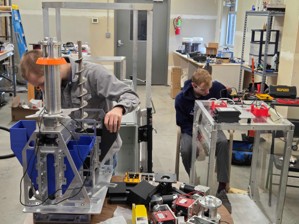
Rego-LIFT
A modular conveyor designed to move lunar regolith and support extraterrestrial processing plants, the logistics backbone for a sustainable lunar presence.
Moving regolith is the first problem of lunar industry.
Before water can be extracted or oxygen produced, regolith has to move: reliably, continuously, and at scale. Rego-LIFT is a modular conveyor built to feed extraterrestrial processing plants, validated through discrete-element simulation and proven in NASA's Break the Ice Lunar Challenge.
- Modular sections scale from demonstrator to full processing-plant feed
- DEM-validated design in Project Chrono's DEM-Engine
- Built for abrasive, low-gravity regolith handling
| Architecture | Modular regolith conveyor |
|---|---|
| Design throughput | >600 kg/hr |
| Application | ISRU feedstock · plant supply |
| Readiness | TRL 5 |
| Funding | NASA SBIR Phase I → Phase II |
| Validation | DEM testbench · simulant tested in vacuum |
Technology Readiness Level is NASA's 1–9 scale for how mature a technology is, from basic principles (TRL 1) to flight-proven (TRL 9). NASA TRL scale ↗
Turn it over yourself.
The same geometry we run in simulation, in your browser. Drag to orbit, then switch configurations to see how one conveyor architecture scales from a flight payload to a permanent surface installation.
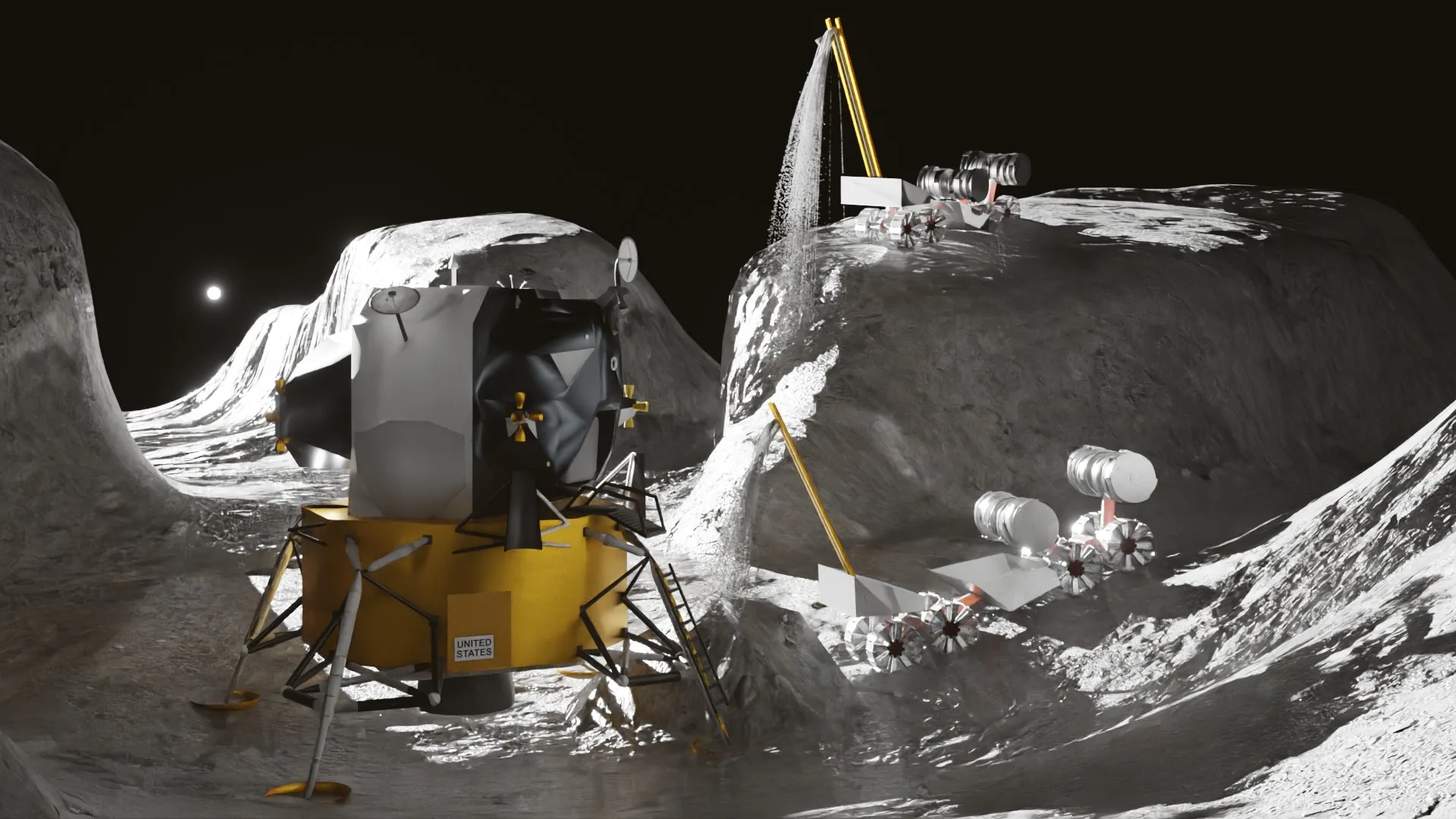
Rego-LIFT on a CLPS lander
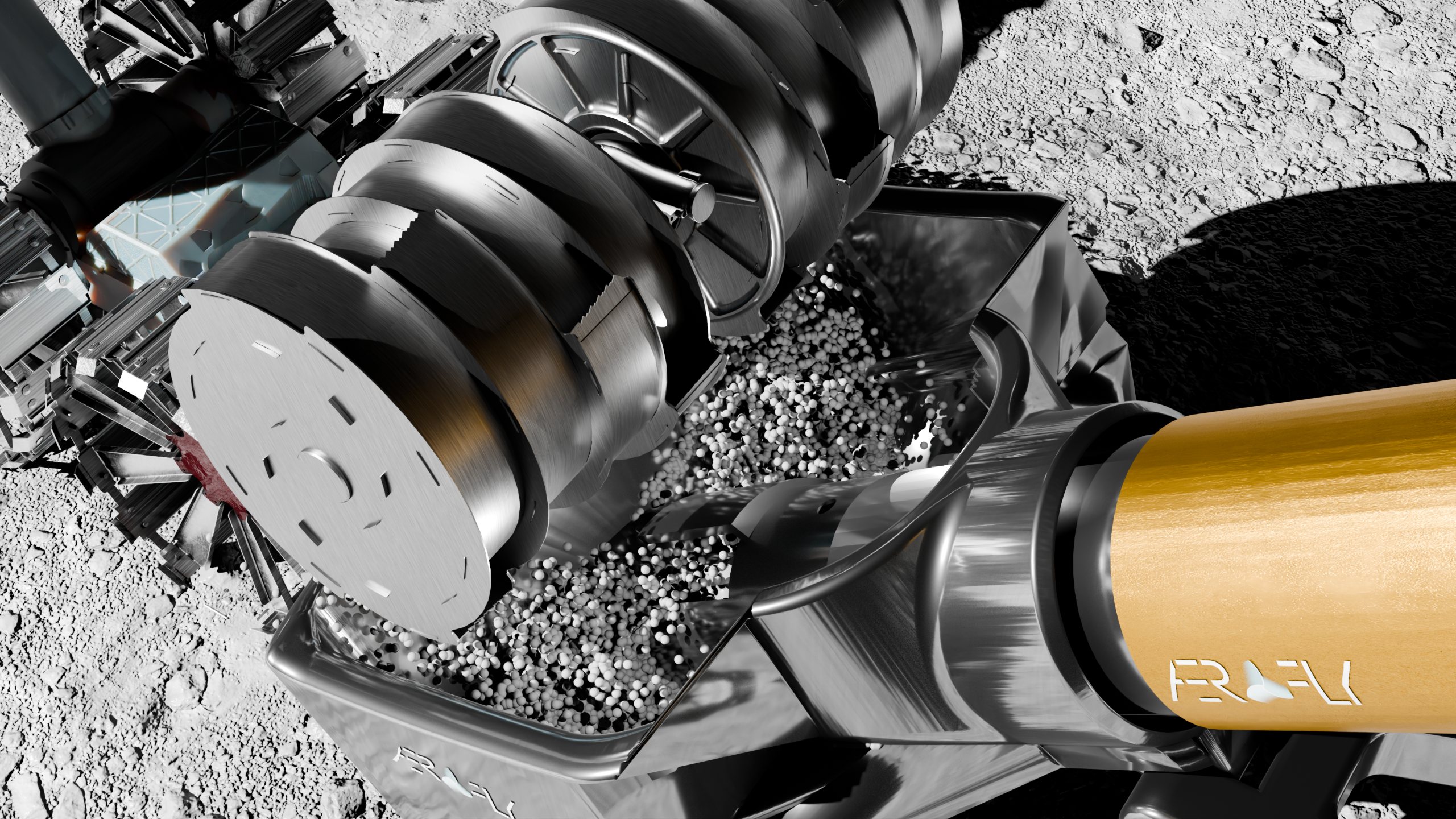
The conveyor configured for a Commercial Lunar Payload Services lander, staged at the south pole with NASA's iPEX rover feeding its intake.
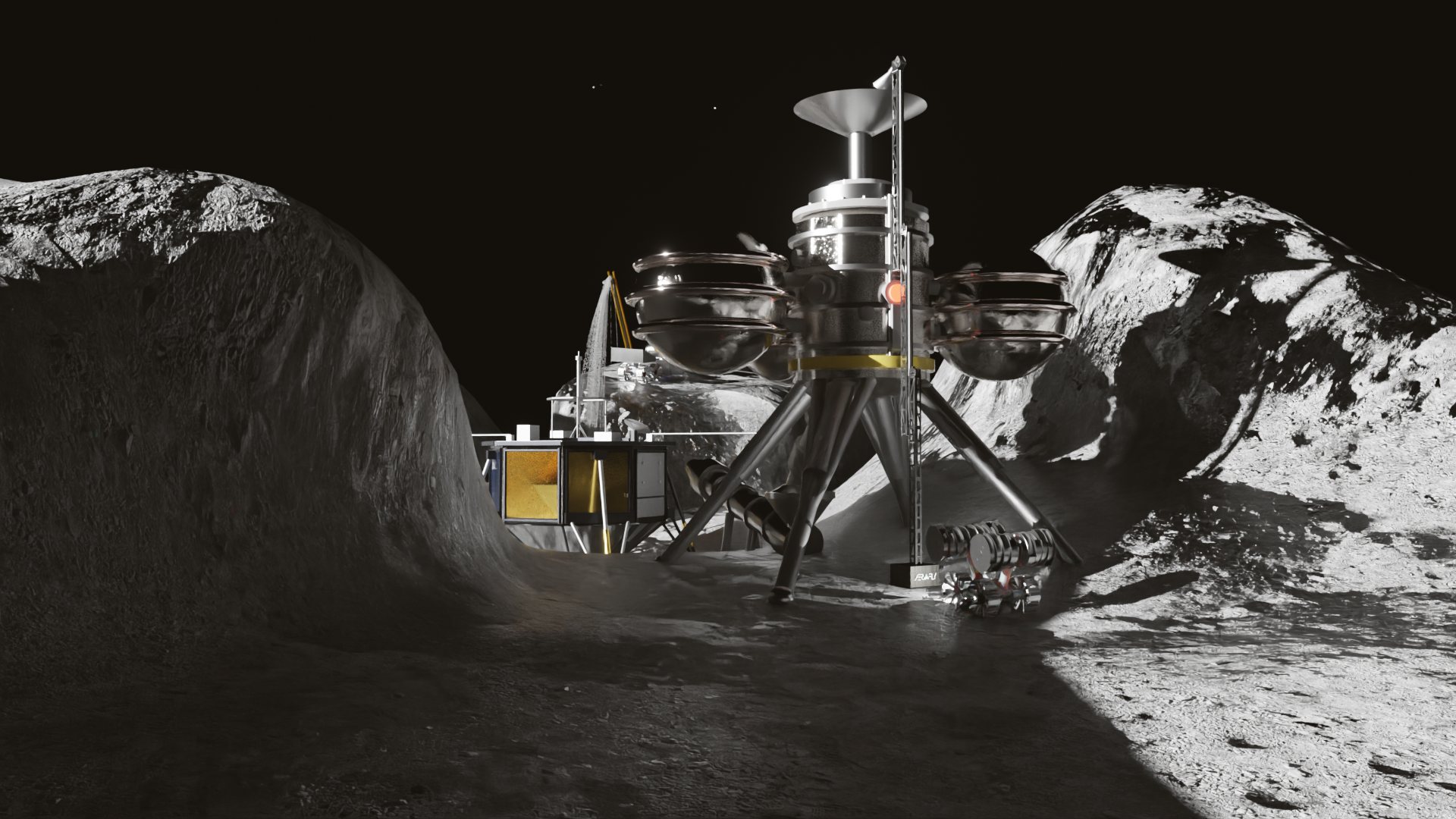
The whole installation
Excavation, conveyance, and processing as one surface operation — the modular sections scaled up to feed a permanent plant rather than a single delivered payload.
Parabolic flight payload
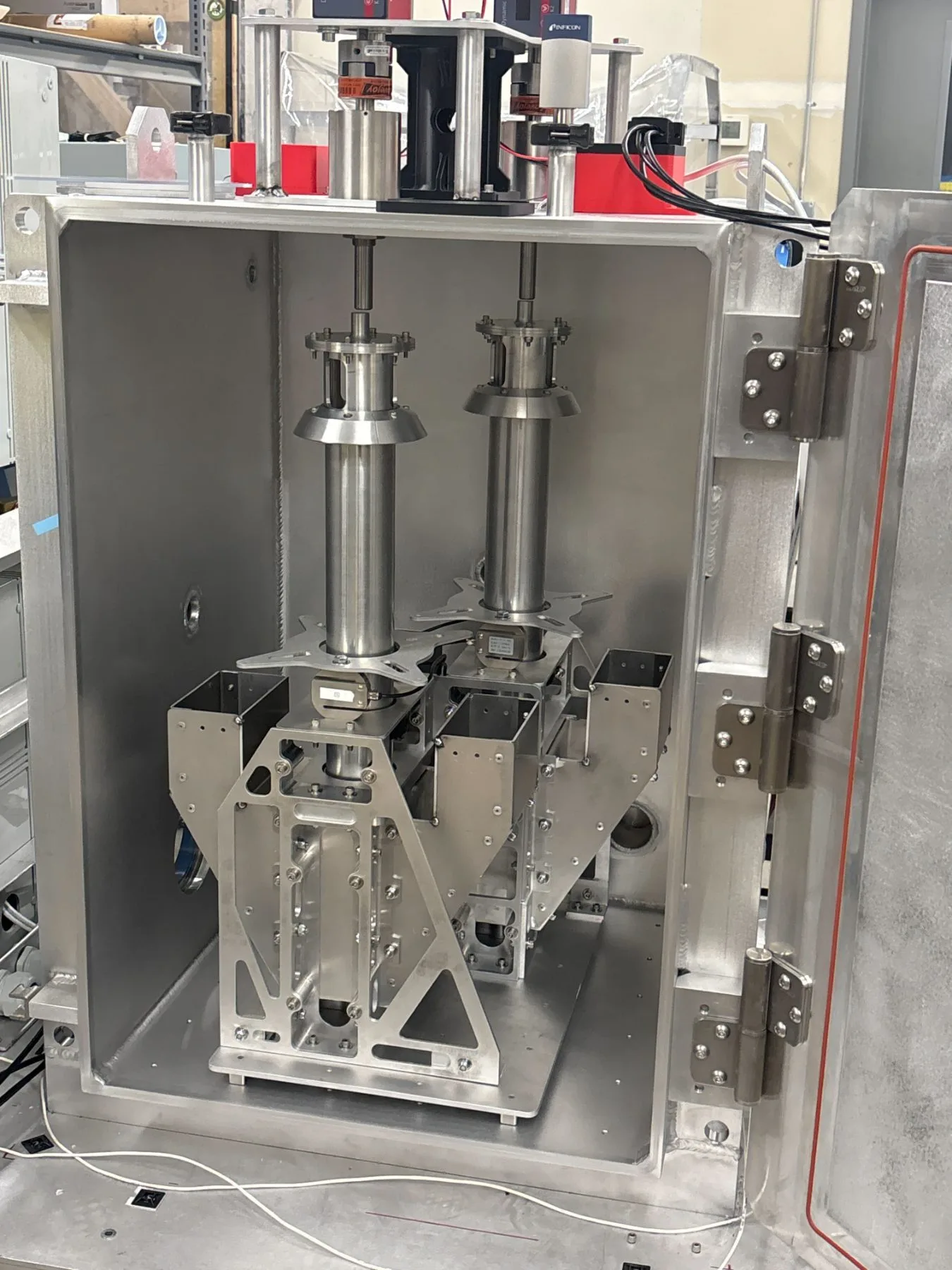
The scaled conveyor built into AeroFly's TechLeap payload, instrumented for flow, torque, and power through dozens of lunar-gravity parabolas.
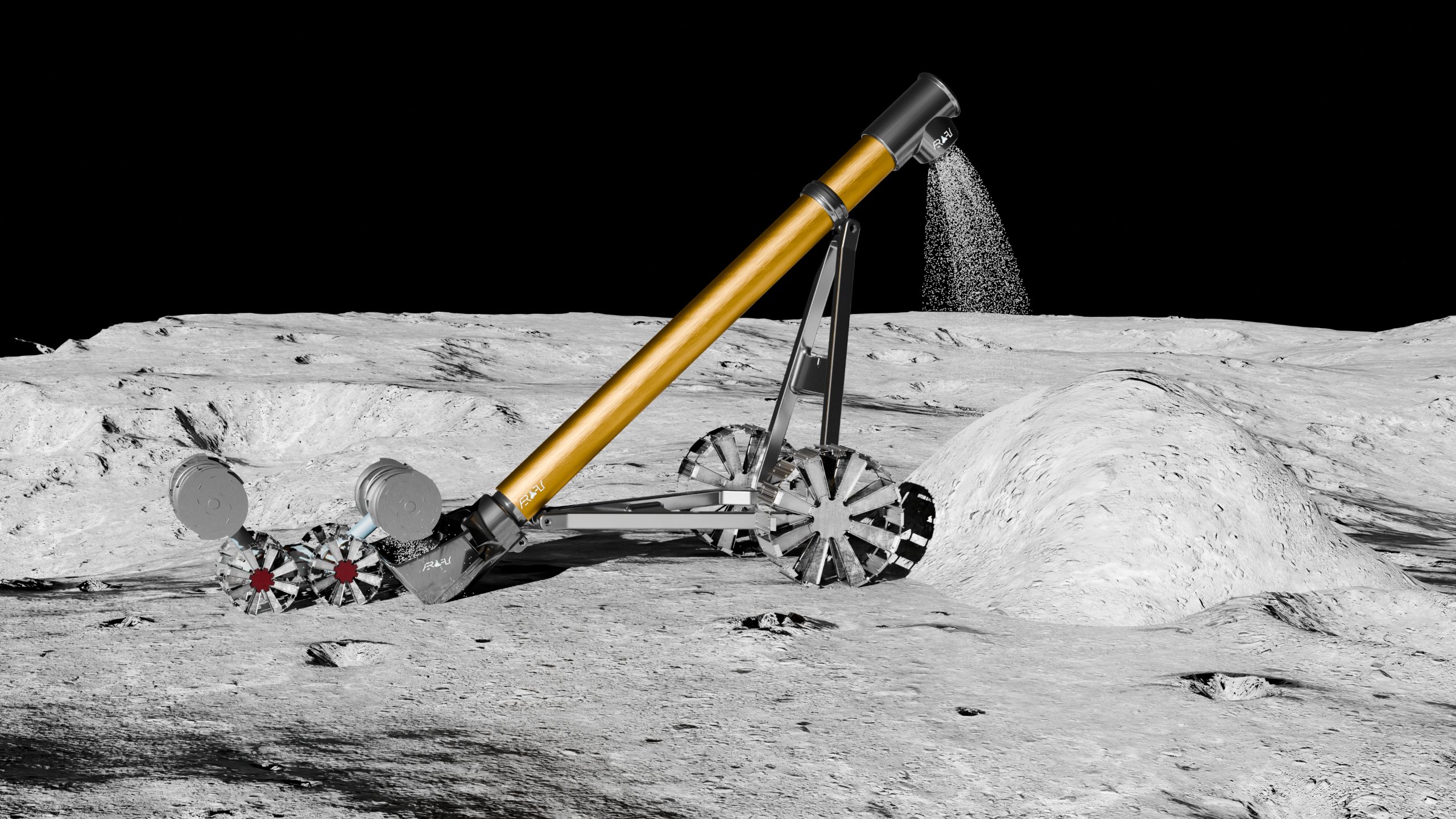
The portable conveyor
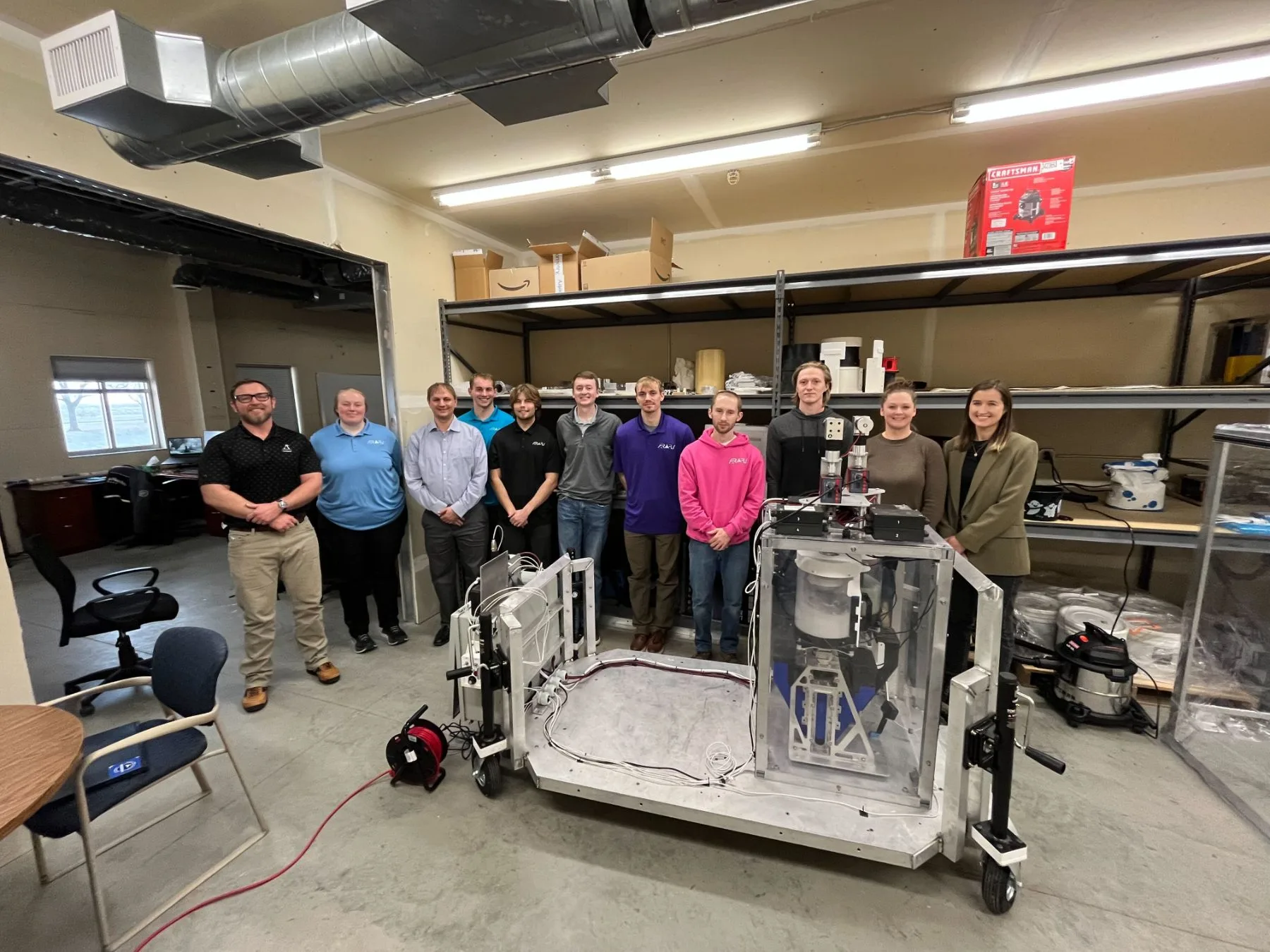
A single-operator unit that drives itself to the dig site, extends, and discharges — the configuration that makes regolith handling mobile rather than fixed infrastructure.
From surface to plant, in three stages.
Intake
Excavated regolith is metered into modular conveyor sections engineered for abrasive, low-gravity flow.
Transport
Continuous conveyance moves material across the surface at >600 kg/hr without dust-sensitive moving contact points.
Feed
Regolith is delivered to processing plants for water extraction, oxygen production, and construction feedstock.
From student venture to Phase II.
Rego-LIFT grew out of NASA competitions and matured into back-to-back SBIR awards, each milestone raising readiness toward lunar deployment.
- 2023NASA Break the Ice Lunar Challenge & RASC-AL: concept validated in competition.
- 2024NASA SBIR Phase I awarded: DEM-Engine simulation of regolith conveyance.
- 2025NASA SBIR Phase II awarded: scaling toward a full demonstrator.
- NextFull-scale terrestrial demonstration; parabolic & suborbital testing for space-like validation.
Readiness steps to lunar deployment.
Full-scale terrestrial demo
A full-scale demonstration as the readiness step ahead of lunar deployment.
Parabolic & suborbital testing
Performance validated in space-like, reduced-gravity conditions.
Digital twin
Expanded twin modeling to refine system designs.
Noble Reach Scholars
Connecting capabilities to broader U.S. technology & workforce needs.
Earth applications
Spin-offs across mining, agriculture, and energy.
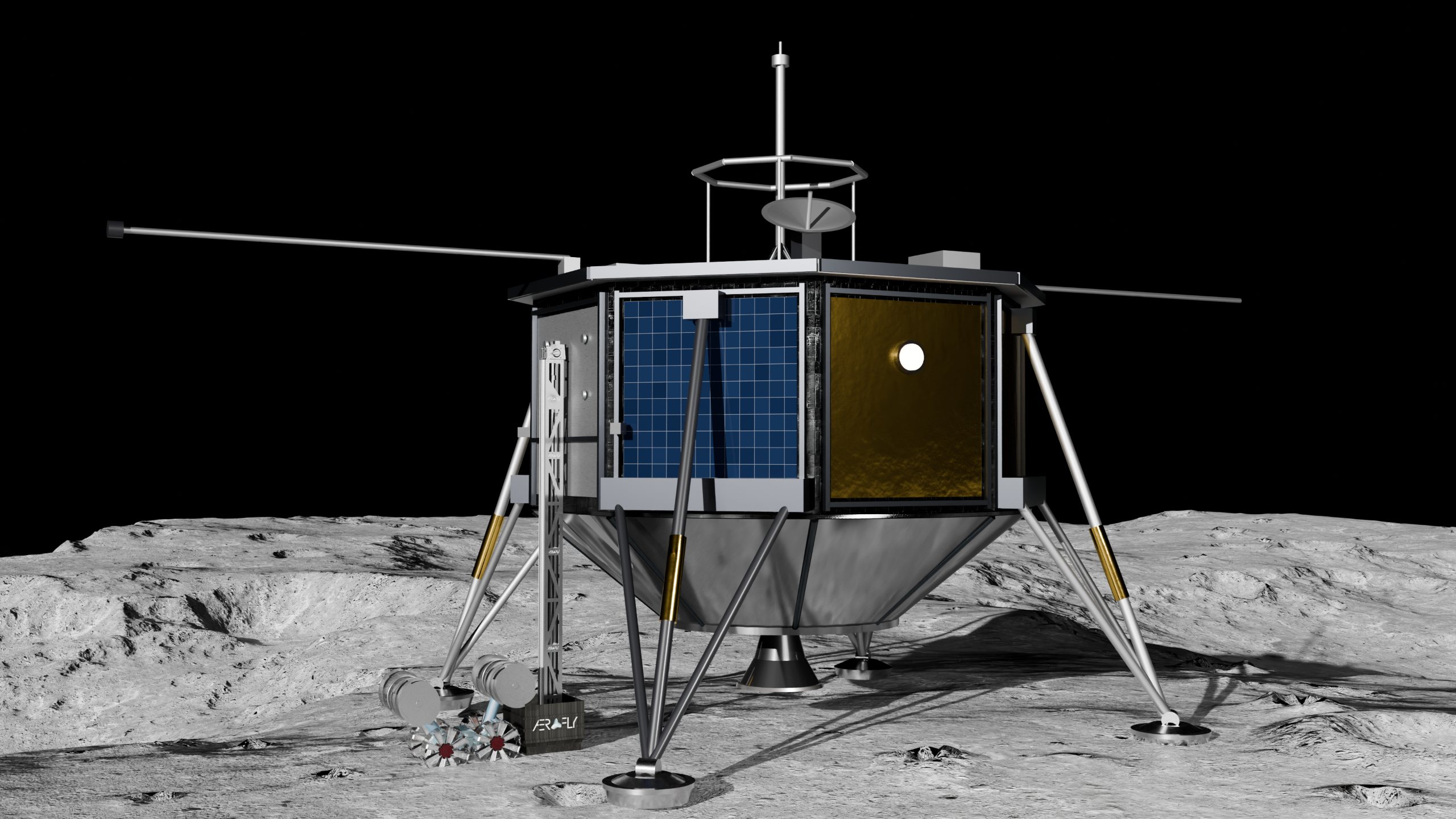
Renders & hardware.
Click any image to open it full-screen.
What survives the Moon thrives on Earth.
Rego-LIFT is engineered for the harshest material-handling environment imaginable: abrasive regolith, vacuum, and one-sixth gravity. That same low-shear, low-wear, modular conveyance solves stubborn bulk-handling problems in terrestrial industry.
Abrasive bulk handling
Continuous conveyance of crushed ore, tailings, and abrasive aggregate with minimal moving parts in contact with the material: less wear, less downtime.
Grain & feedstock transport
Gentle, low-shear movement of grain, seed, and biomass that protects product integrity where conventional augers and belts damage or jam.
Process & waste streams
Reliable handling of fly ash, biomass, and process solids in energy and industrial plants, modeled and de-risked with the same DEM digital twin.